




Permanent vs Removable Vinyl Guide: Oracal 651 vs 631
 Published
 Updated
Permanent vs removable vinyl comes down to the adhesive, not the film. Permanent craft vinyl such as Oracal 651 uses a solvent based adhesive rated for up to six years outdoors. Removable vinyl such as Oracal 631 uses a water based adhesive designed to lift cleanly within three years.
In permanent vs removable vinyl terms, both are calendered PVC films of similar thickness, both cut on the same machine with the same blade, and both weed the same way. Everything that differs between them happens at the glue line, and that is also where every project failure happens: a decal that peels off a mug after one wash, or a wall quote that takes the paint with it.
Choosing correctly is not about how long you want the design to last. It is about what the surface can survive when the design comes off. That distinction is the whole article, and it is the one most beginners get backwards. If you are new to cutting vinyl at all, the vinyl cutting and application guide covers the mechanics first.
What the Datasheets Actually Say
Orafol publishes technical data for both permanent and removable vinyl films, and the numbers are more specific than the marketing shorthand on a craft store shelf.
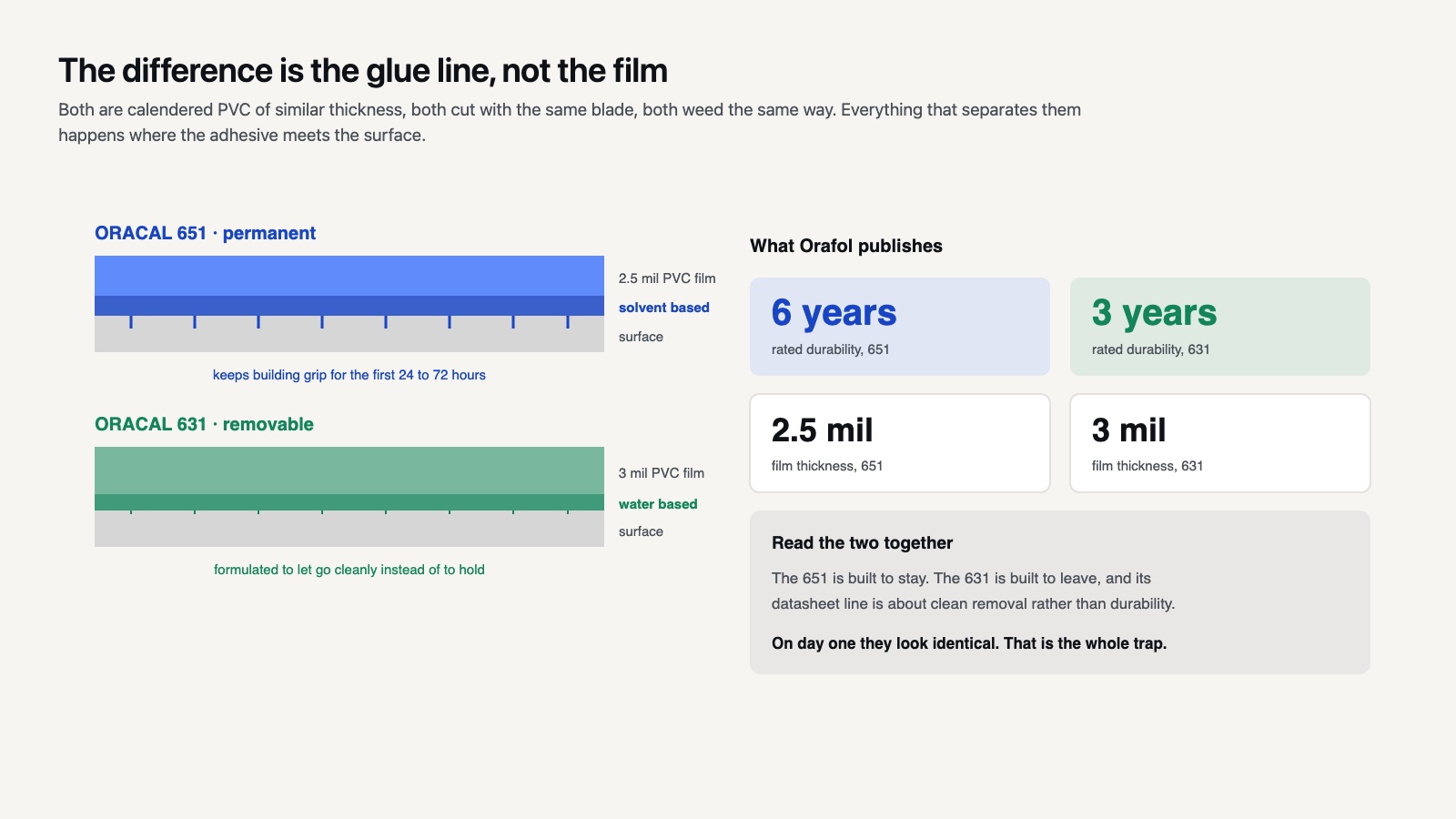
ORACAL 651 is an intermediate calendered PVC film, 2.5 mil thick, with a clear solvent based permanent adhesive, rated for medium term applications of up to six years. Orafol also notes its dimensional stability, meaning the film resists shrinking and distorting over time, which is why sign shops use it on vehicles.
ORACAL 631 is a short term calendered film, 3 mil thick, with a clear water based removable adhesive, rated up to three years. The important line is about removal rather than durability: it is formulated to come off most smooth sealed surfaces within three years without leaving residue.
Read those two together and the design intent becomes clear. The 651 is built to stay; the 631 is built to leave. Neither claim is about how strong the vinyl looks on day one, because on day one they look identical.
📐 Technical Note
Solvent based and water based describe the adhesive carrier, not whether the finished decal is waterproof. Both films are waterproof once applied. The carrier affects how the adhesive cures and how aggressively it bonds: solvent based adhesives keep building grip for the first 24 to 72 hours, which is why a fresh 651 decal can still be repositioned and a week old one cannot.
Permanent and removable side by side
| Property | Permanent (Oracal 651) | Removable (Oracal 631) |
|---|---|---|
| Adhesive | Solvent based, permanent | Water based, removable |
| Film thickness | 2.5 mil | 3 mil |
| Rated life | Up to 6 years | Up to 3 years |
| Typical finish | Gloss and matte | Matte |
| Dishwasher | Hand wash advised anyway | No |
| Outdoor use | Yes | Short term only |
| Removal | Damages paint and paper | Clean from sealed surfaces |
Why Craft Vinyl and Sign Vinyl Are the Same Thing
Oracal 651 is sold in two places under two names, and crafters often assume they are different products.
The sign trade buys it as ORACAL 651 Intermediate Cal, on wide rolls. Craft stores sell the same film in 12 inch rolls and sheets, and Orafol markets it directly to that audience as 651 Craft. The film, the adhesive and the performance figures are the same. What changes is roll width, color range and price per square foot, which is considerably higher in craft packaging.
This matters practically. If you are cutting enough vinyl to go through a roll a month, buying a 24 inch sign roll and cutting it down costs a fraction of buying craft sheets. The technical data on the sign side applies exactly to what you have been using. Orafol even publishes a direct comparison document for the two films aimed at exactly this question.
The catch is machine width. A home cutter takes 12 inch material, so a wider roll needs cutting down before it goes on the mat, which is a five minute job with a straight edge and a rotary cutter but is not nothing. Anyone producing repeat designs at volume usually decides the saving is worth it by the second roll.
Which Vinyl for Which Project?
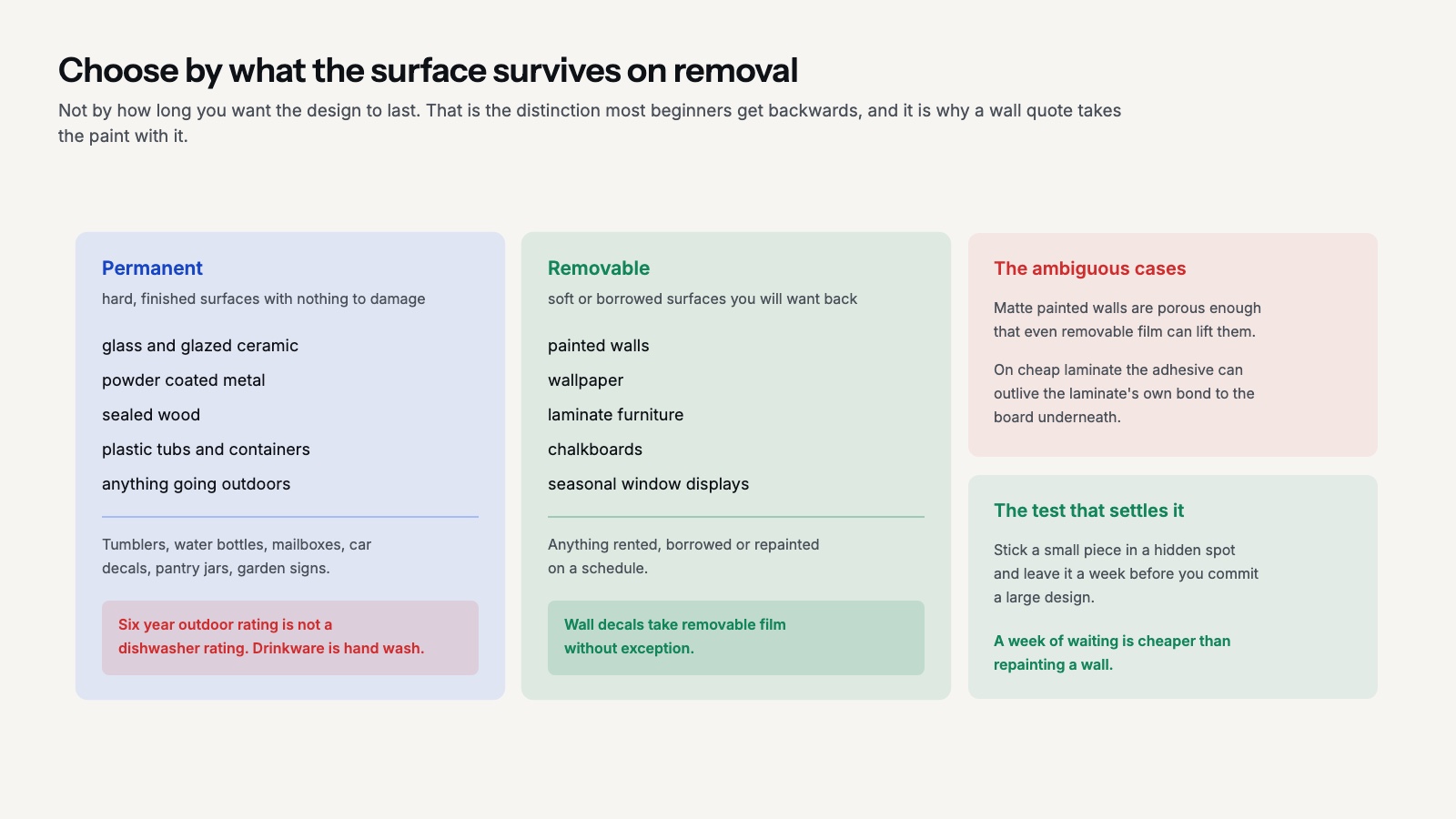
Work from the surface backwards. The question is not how permanent you want it but what happens on removal. That decision comes before the design, not after it, whatever project you have in mind.
Permanent belongs on glass, glazed ceramic, powder coated metal, sealed wood, plastic tubs and anything going outdoors. Tumblers, water bottles, mailboxes, car decals, pantry jars, garden signs. These surfaces are hard and finished, so an aggressive adhesive has nothing to damage.
Removable belongs on painted walls, wallpaper, laminate furniture, chalkboards, windows you will redecorate seasonally and anything borrowed or rented. A wall quote in 651 will pull paint and drywall facing when it comes down, and that is not a hypothetical: the film is doing exactly what its datasheet promises.
The ambiguous cases are matte painted walls, which are porous enough that even removable vinyl can lift the surface, and cheap laminate, where the adhesive can outlive the laminate’s own bond to the board. Test a small piece in a hidden spot and leave it a week before committing a large design.
🔢 Quick Numbers
- Up to 6 years rated durability for ORACAL 651, per Orafol’s Americas product page
- Up to 3 years for ORACAL 631, per Orafol’s Americas product page
- 2.5 mil film thickness for 651 against 3 mil for 631, per the same Orafol pages
- Clean removal from most smooth sealed surfaces within three years for 631, per Orafol
What Happens If You Use the Wrong One?
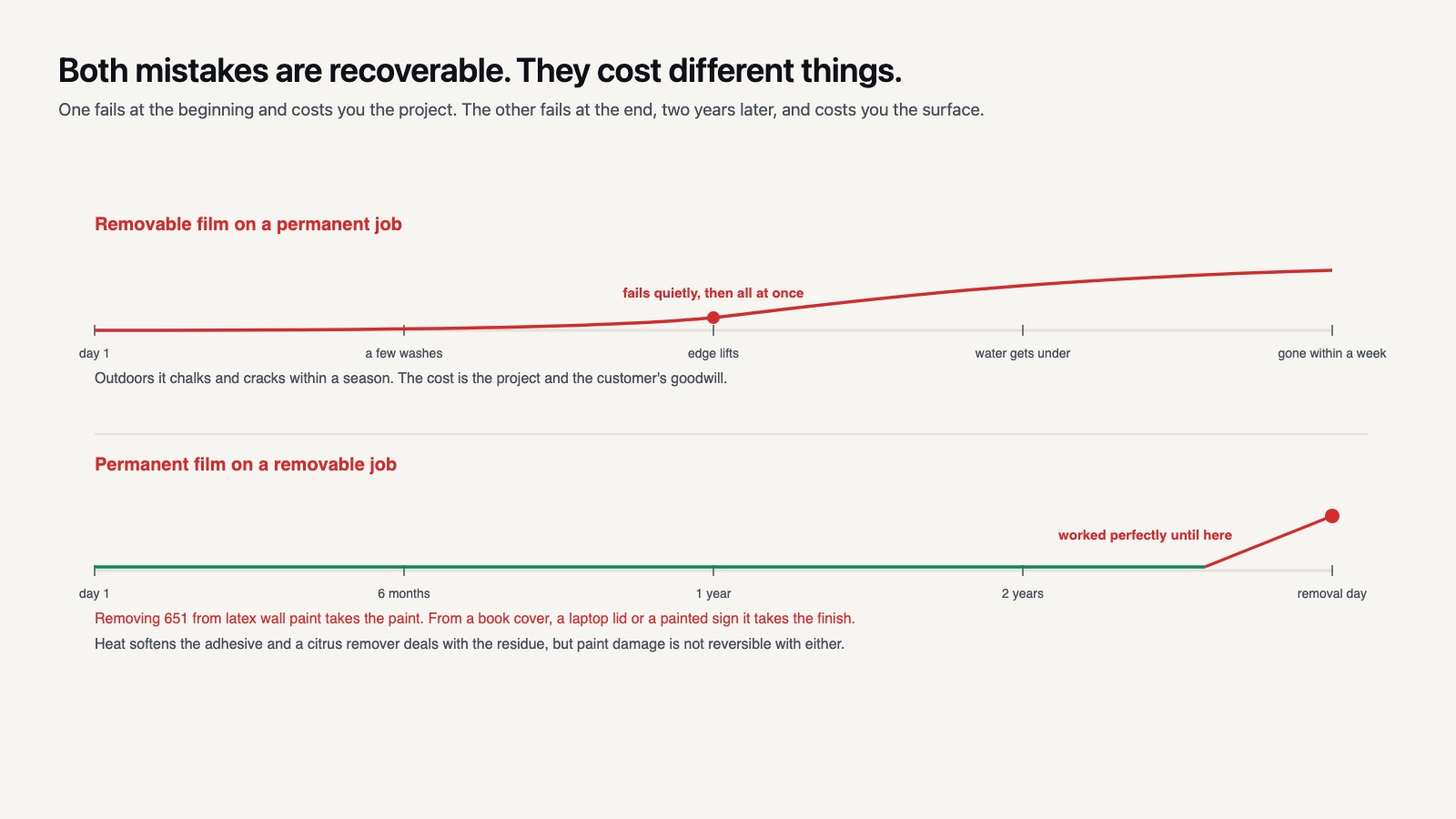
Both permanent vs removable vinyl errors are recoverable, but they cost different things.
Removable vinyl on a permanent job fails quietly and then all at once. On a tumbler it will survive a few gentle hand washes and then lift at an edge, and once water gets under the edge the whole decal peels within a week. Outdoors it chalks and cracks within a season. The cost is the project and the customer’s goodwill.
Permanent vinyl on a removable job fails at the end rather than the beginning, which is worse because the design worked perfectly for two years first. Removing 651 from latex wall paint takes paint with it. Removing it from a book cover, a laptop lid or a painted wooden sign usually takes the finish. Heat helps, a hairdryer softens the adhesive, and an adhesive remover deals with what is left, but paint damage is not reversible with either.
For decals you sell rather than keep, this is a labeling issue as much as a materials one. Telling a buyer which film their decal is cut from, and on what surface it belongs, prevents the complaint before it happens. Our decal and design files cut equally well on either film, so the choice sits entirely with the maker rather than the file.
⚠️ Common Mistake to Avoid
Putting permanent vinyl in the dishwasher because the roll says permanent. Six year outdoor durability describes weathering, not sustained heat plus detergent plus high pressure water. Every craft vinyl decal on a mug or tumbler is hand wash only, and sellers who do not say so on the listing get the message back as a refund request.
Does Finish Change Durability?
Gloss and matte are surface finishes rather than different films, and they do not change the adhesive underneath. The rated life is the same.
What finish does change is how the design reads and how it wears visibly. Gloss shows fingerprints and scratches more, which on a tumbler handled daily becomes obvious within months even though the vinyl is bonded perfectly well. Matte hides handling but shows water spotting on glass.
Permanent film is commonly available in both finishes; removable film is usually matte only, which is deliberate. Removable vinyl’s main uses are walls and windows, where matte avoids glare and looks closer to paint or etched glass.
There is one performance effect worth knowing. Matte films are marginally easier to weed because the surface is less slippery under a weeding hook, and they photograph better for product listings, which matters more than it should for anyone selling finished drinkware online.
Cutting and Weeding Differences
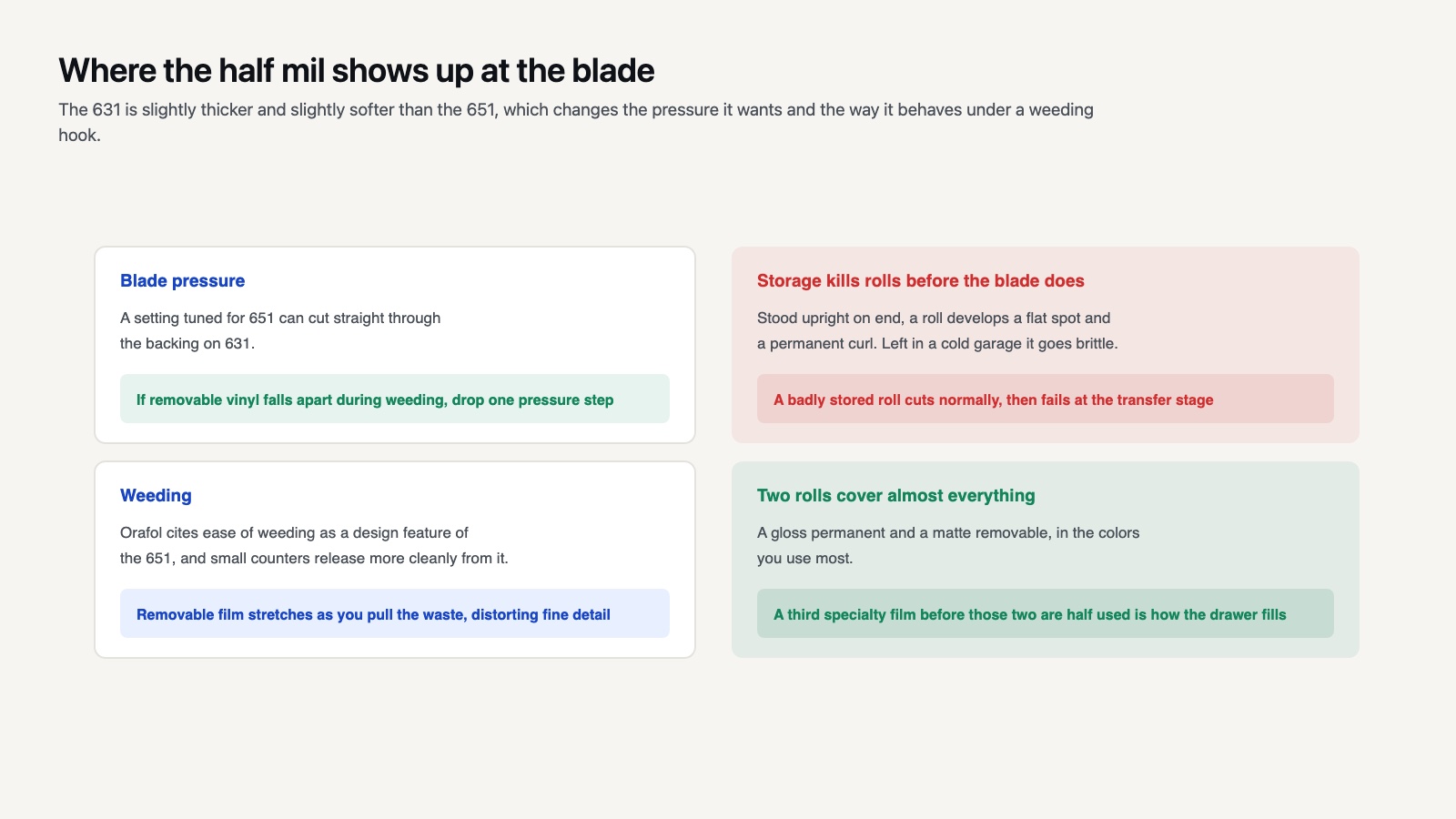
The 0.5 mil thickness difference between the two films is small but real, and it shows up at the blade.
The 631 is slightly thicker and slightly softer, so a blade setting tuned for 651 can cut through the backing on 631. If your removable vinyl is falling apart during weeding, or the backing paper is separating, drop the pressure by one step rather than assuming the roll is faulty.
Weeding behaves differently too. Orafol specifically cites ease of weeding as a design feature of the 651, and in practice small counters and thin script release more cleanly from it. Removable films tend to stretch slightly as you pull the waste, which distorts fine detail. For small text and script lettering files, permanent film is the easier material even when the job is temporary, and many makers keep a matte permanent roll for that reason.
Storage affects both films and affects the removable one faster. Rolls kept upright on end develop a flat spot and a permanent curl; rolls left in a cold garage go brittle and crack during weeding. Hang them on a rail or lay them flat, and keep them indoors. A roll that has been stored badly will cut normally and then fail at the transfer stage, which sends people hunting for a machine fault that is not there.
Transfer tape choice is the same for both, standard grip for these smooth films, with one caution: removable vinyl’s weaker adhesive means a strong grip tape is much more likely to keep the design. Match tape to film, and when in doubt on 631, go lighter. The label making walkthrough shows the same balance on small designs, where the adhesive area is tiny and the tape wins easily.
✅ Key Takeaways
- The difference is the adhesive: solvent based and permanent on 651, water based and removable on 631.
- Choose by what the surface can survive on removal, not by how long you want the design to last.
- Permanent goes on glass, glazed ceramic, sealed wood, metal and anything outdoors.
- Removable goes on painted walls, wallpaper, laminate and anything rented or seasonal.
- Permanent craft vinyl is still hand wash only on drinkware, whatever the outdoor rating says.
Final Thoughts
Two rolls cover almost everything a home cutter will do: a gloss permanent and a matte removable, in the colors you use most. Buying a third specialty film before those two are half used is the most common way a vinyl drawer fills up with material nobody reaches for. The tips section covers the application habits that make either film behave, and the machine basics guide covers blade and pressure settings.
Frequently Asked Questions
Is Cricut permanent vinyl the same as Oracal 651?
Not identical, but comparable in class. Cricut Premium Permanent is a calendered film with a permanent adhesive in the same category, and it performs similarly on the surfaces where 651 is used. Oracal publishes detailed technical data and Cricut publishes less, which is why 651 is the reference point people quote.
How do I remove permanent vinyl without damaging the surface?
Warm the decal with a hairdryer until the adhesive softens, lift a corner with a plastic scraper rather than a blade, and pull slowly at a shallow angle. Residue comes off with isopropyl alcohol on glass and metal, or a citrus based adhesive remover on plastic. On painted surfaces there is no method that reliably protects the paint.
Can I use removable vinyl outdoors?
For short periods, yes. Removable film is rated up to three years but that rating assumes normal conditions, and UV plus rain will fade and lift it much faster than that. Event signage and seasonal window decals are reasonable uses; a mailbox is not.
Which one do I use for a wall decal?
Removable, without exception, unless the wall is tiled or glossy painted and you have tested a sample. Latex and matte paint will come away with a permanent film, and textured walls will not hold either film well enough to be worth the material.